

Why Mamagreen?
Selecting MAMAGREEN is making a conscious choice for style combined with durability.
MAMAGREEN furniture pieces are partially handmade and manufactured using natural materials. Small differences between furniture pieces, random minor imperfections, weight and dimension differences and weathering of materials are part of its unique character.
Actual material colours and textures can be different from digital display or printed media.
What Are Sunbrella Cushions Made Of?
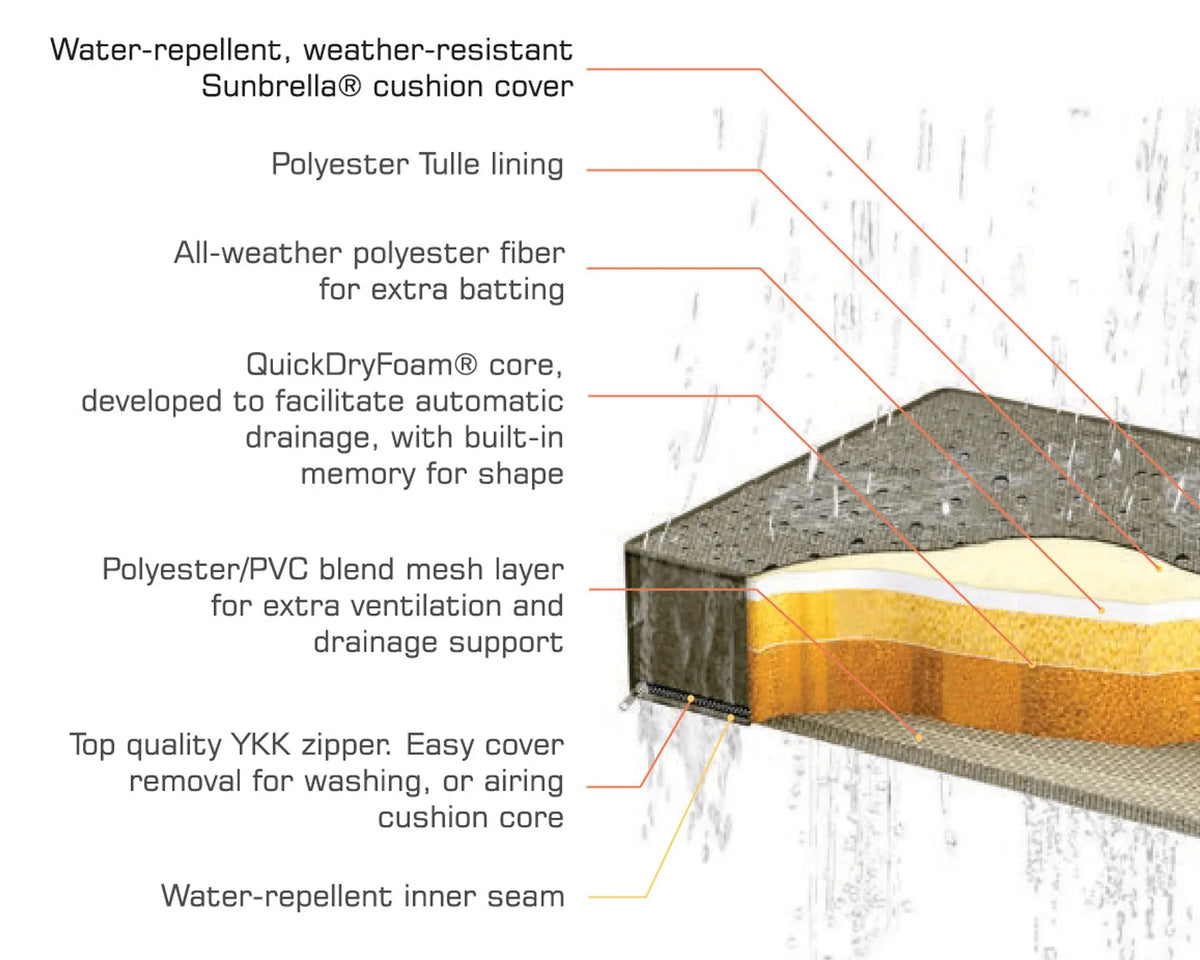
Made in the USA by Glen Raven, Sunbrella cushion covers suit all lounge collections except Aiko. The fabric is 100% solution-dyed acrylic (260 gr/m²) with a soft, flexible feel, UV resistance, an anti-stain treatment and water repellency. Heavier sailcloth and special ranges (400/580 gr/m²) feel more indoor and take longer to dry. Thanks to a fast-drying, open-cell outdoor memory foam core, these cushions dry fast and keep their colour and shape, even with intensive use. After rain, protective covers are fine, but never cover wet cushions.
How Do I Care for Aiko Collection Cushions?
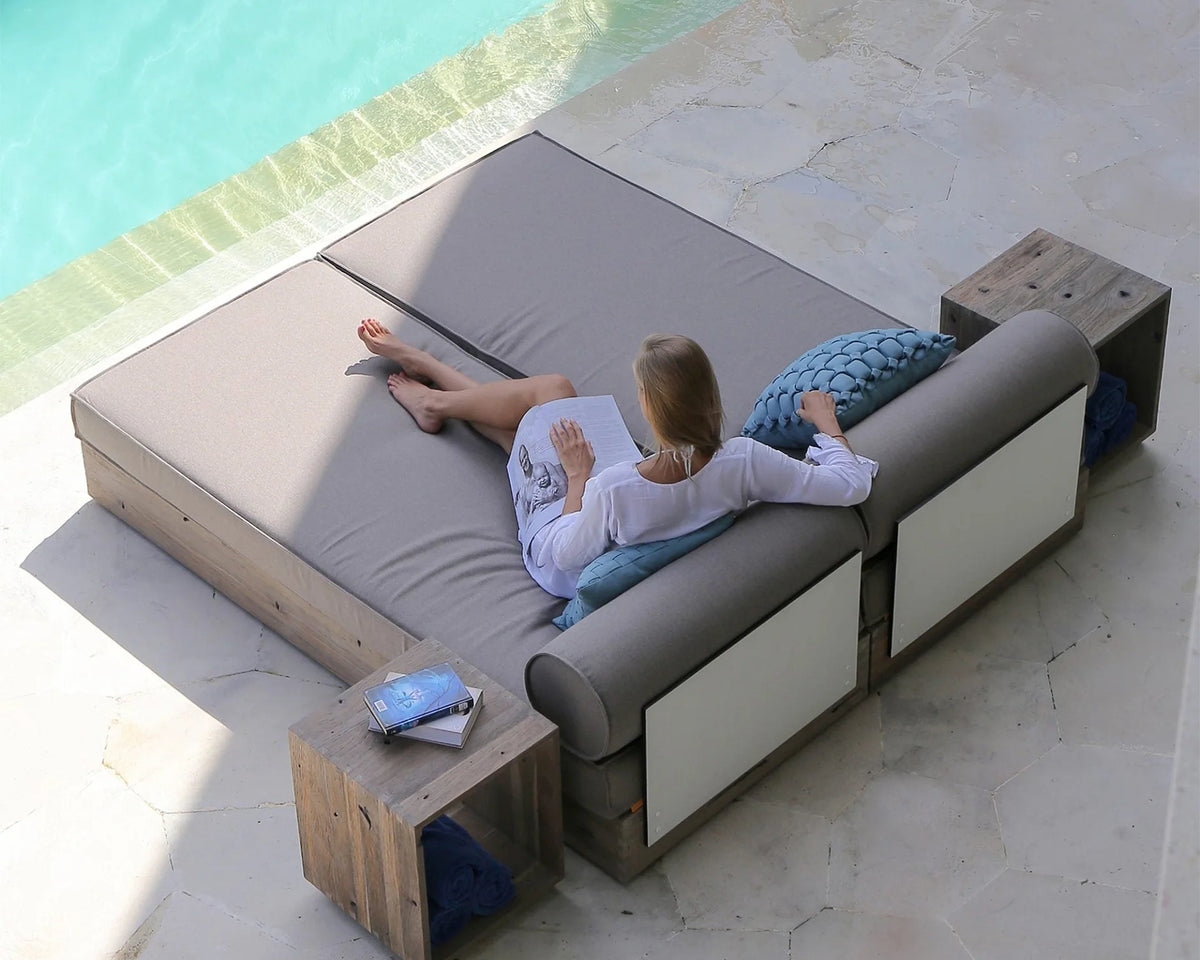
AIKO cushions have an outdoor memory foam core inside a water-resistant barrier, so some water can stay trapped between the cover and inner liner. Air and dry the cover and core separately to extend their life, and store cushions vertically with the mesh side down for better airflow. Side ventilation holes stop air being trapped, known as “ballooning”. After rain, protective covers are fine, but never cover wet cushions for long. See the Sunbrella upholstery cleaning guide.
What Is Sunbrella Agora Fabric?
Made in Spain by Tuvatextil S.L., Agora is a semi-stiff, solution-dyed acrylic developed for waterproof outdoor lounge cushions. It has a laminated waterproof back layer, plus anti-stain, oil-repellent and mildew-resistant properties. The fast-drying, open-cell memory foam core has side ventilation holes to prevent “ballooning”. To extend its life, air-dry the cover and core separately at least twice a year, or more with frequent use. Store cushions upright when not in use or during showers to avoid puddles, and never cover them when wet or dirty.
What Are Sunbrella Cushions Made Of?
Made in the USA by Glen Raven, Sunbrella cushion covers suit all lounge collections except Aiko. The fabric is 100% solution-dyed acrylic (260 gr/m²) with a soft, flexible feel, UV resistance, an anti-stain treatment and water repellency. Heavier sailcloth and special ranges (400/580 gr/m²) feel more indoor and take longer to dry. Thanks to a fast-drying, open-cell outdoor memory foam core, these cushions dry fast and keep their colour and shape, even with intensive use. After rain, protective covers are fine, but never cover wet cushions.
How Do I Care for Aiko Collection Cushions?
AIKO cushions have an outdoor memory foam core inside a water-resistant barrier, so some water can stay trapped between the cover and inner liner. Air and dry the cover and core separately to extend their life, and store cushions vertically with the mesh side down for better airflow. Side ventilation holes stop air being trapped, known as “ballooning”. After rain, protective covers are fine, but never cover wet cushions for long. See the Sunbrella upholstery cleaning guide.
What Is Sunbrella Agora Fabric?
Made in Spain by Tuvatextil S.L., Agora is a semi-stiff, solution-dyed acrylic developed for waterproof outdoor lounge cushions. It has a laminated waterproof back layer, plus anti-stain, oil-repellent and mildew-resistant properties. The fast-drying, open-cell memory foam core has side ventilation holes to prevent “ballooning”. To extend its life, air-dry the cover and core separately at least twice a year, or more with frequent use. Store cushions upright when not in use or during showers to avoid puddles, and never cover them when wet or dirty.
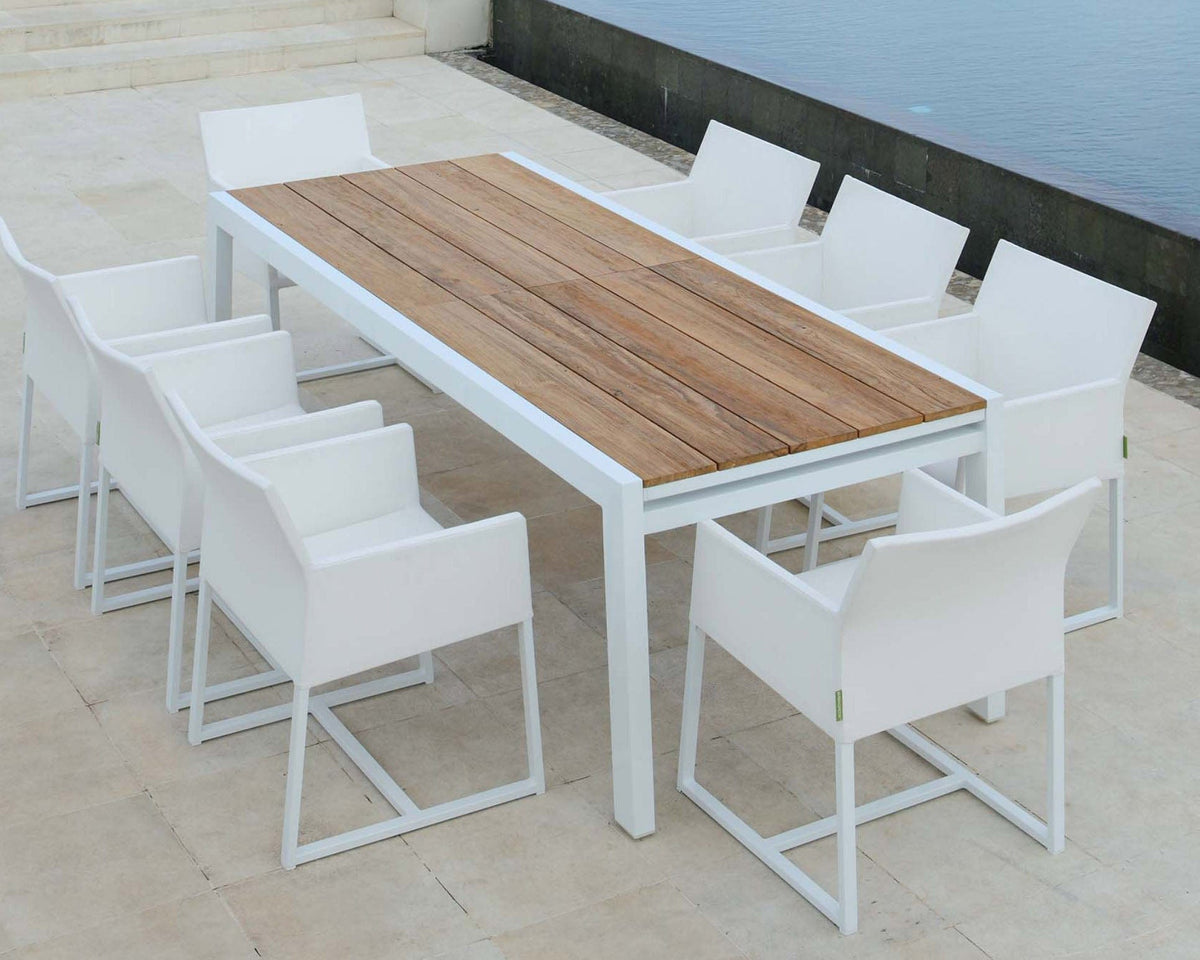
Why Is Teak Ideal for Outdoor Furniture?
Teak (Tectona grandis) is a tropical hardwood native to Southeast Asia. Its high tensile strength, rich oil content and close grain make mature teak highly resistant to pests, rot and termites, and very stable outdoors. Mamagreen makes its teak furniture entirely in-house. Each piece of wood is selected for strength and look, shaped with precise machinery, and kiln dried to the right moisture content before processing and gluing. Skilled craftspeople then wire-brush or polish the finished piece.
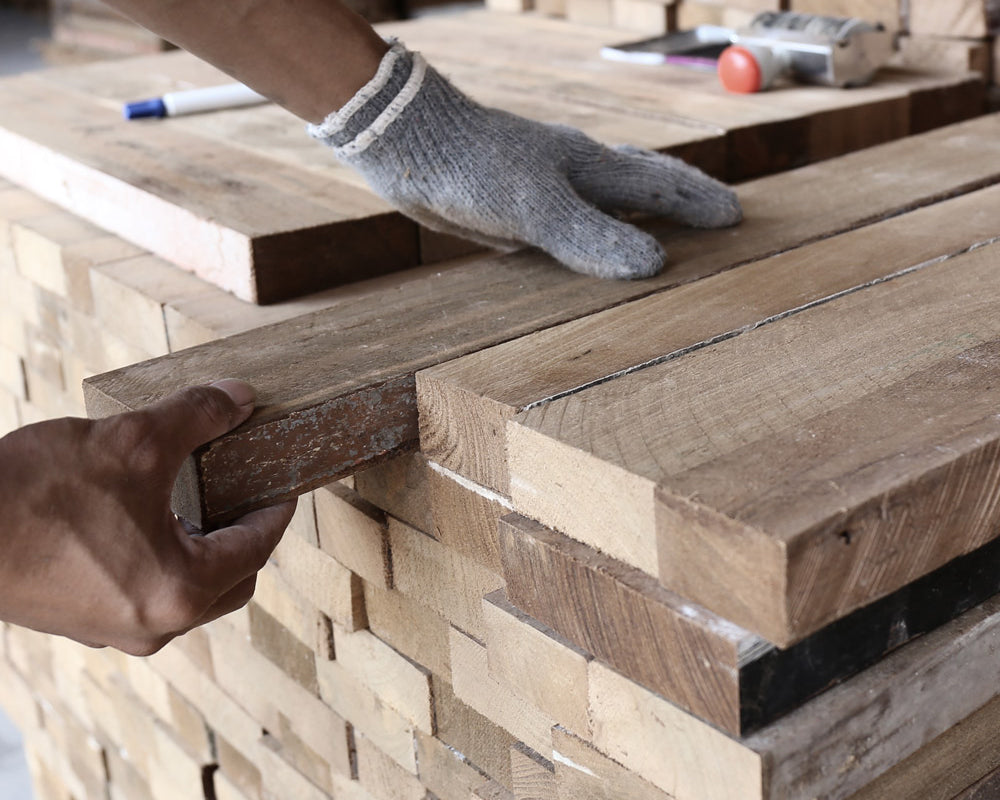
What Is Recycled Teak, and How Does It Age?
Recycled teak is salvaged from abandoned buildings and reborn as furniture, a sustainable alternative to harvesting timber from forests or plantations. Dents, scratches, nail and bolt marks, hair cracks and colour variation make every piece unique. This suits those who love character over a uniform finish. Over time it weathers to a silver-grey patina, and cracks, colour shifts or rust marks from old metal may appear. Most collections have a wire-brushed surface, so brush regularly to clear trapped food and organic matter. Zudu and Zupy have a smooth sanded finish and are best cleaned with a soft brush and soapy water.
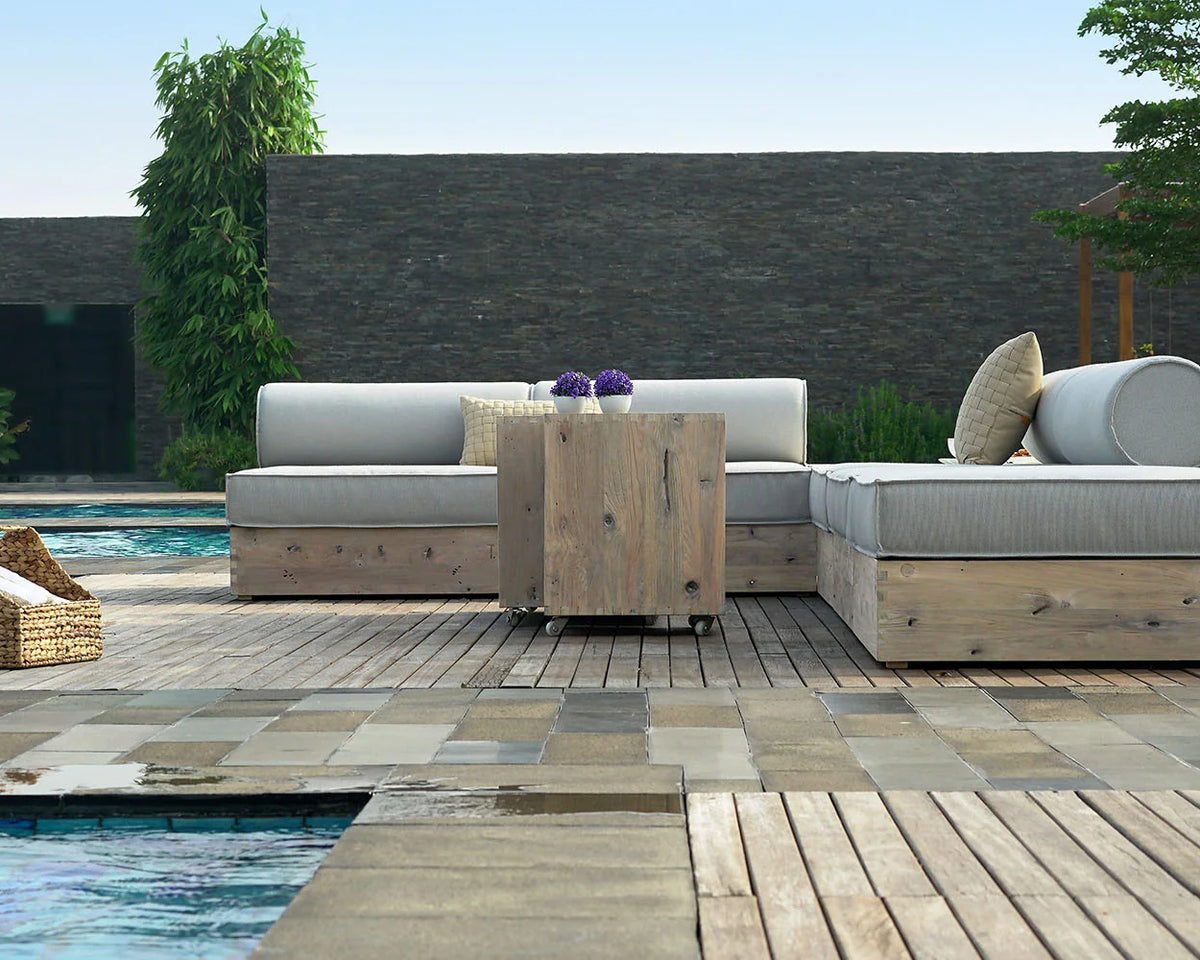
What Is Drift-Look Teak, and How Do I Care for It?
Created for the AIKO collection, drift-look teak is reclaimed through an upcycling process that highlights the wood’s distress marks. Like driftwood washed up on a beach, every piece is individual and perfect for outdoor living. It is delivered in an “original” or rich “espresso” finish, sealed with a teak shield. To preserve the finish, avoid solvents and chemicals. Wash down regularly with plain water, wipe with a microfiber or lint-free cloth, and let it dry naturally. Treat spills the same way straight away to avoid spotting.
Why Is Teak Ideal for Outdoor Furniture?
Teak (Tectona grandis) is a tropical hardwood native to Southeast Asia. Its high tensile strength, rich oil content and close grain make mature teak highly resistant to pests, rot and termites, and very stable outdoors. Mamagreen makes its teak furniture entirely in-house. Each piece of wood is selected for strength and look, shaped with precise machinery, and kiln dried to the right moisture content before processing and gluing. Skilled craftspeople then wire-brush or polish the finished piece.
What Is Recycled Teak, and How Does It Age?
Recycled teak is salvaged from abandoned buildings and reborn as furniture, a sustainable alternative to harvesting timber from forests or plantations. Dents, scratches, nail and bolt marks, hair cracks and colour variation make every piece unique. This suits those who love character over a uniform finish. Over time it weathers to a silver-grey patina, and cracks, colour shifts or rust marks from old metal may appear. Most collections have a wire-brushed surface, so brush regularly to clear trapped food and organic matter. Zudu and Zupy have a smooth sanded finish and are best cleaned with a soft brush and soapy water.
What Is Drift-Look Teak, and How Do I Care for It?
Created for the AIKO collection, drift-look teak is reclaimed through an upcycling process that highlights the wood’s distress marks. Like driftwood washed up on a beach, every piece is individual and perfect for outdoor living. It is delivered in an “original” or rich “espresso” finish, sealed with a teak shield. To preserve the finish, avoid solvents and chemicals. Wash down regularly with plain water, wipe with a microfiber or lint-free cloth, and let it dry naturally. Treat spills the same way straight away to avoid spotting.
How Does Teak Furniture Wear, and How Should I Care for It?
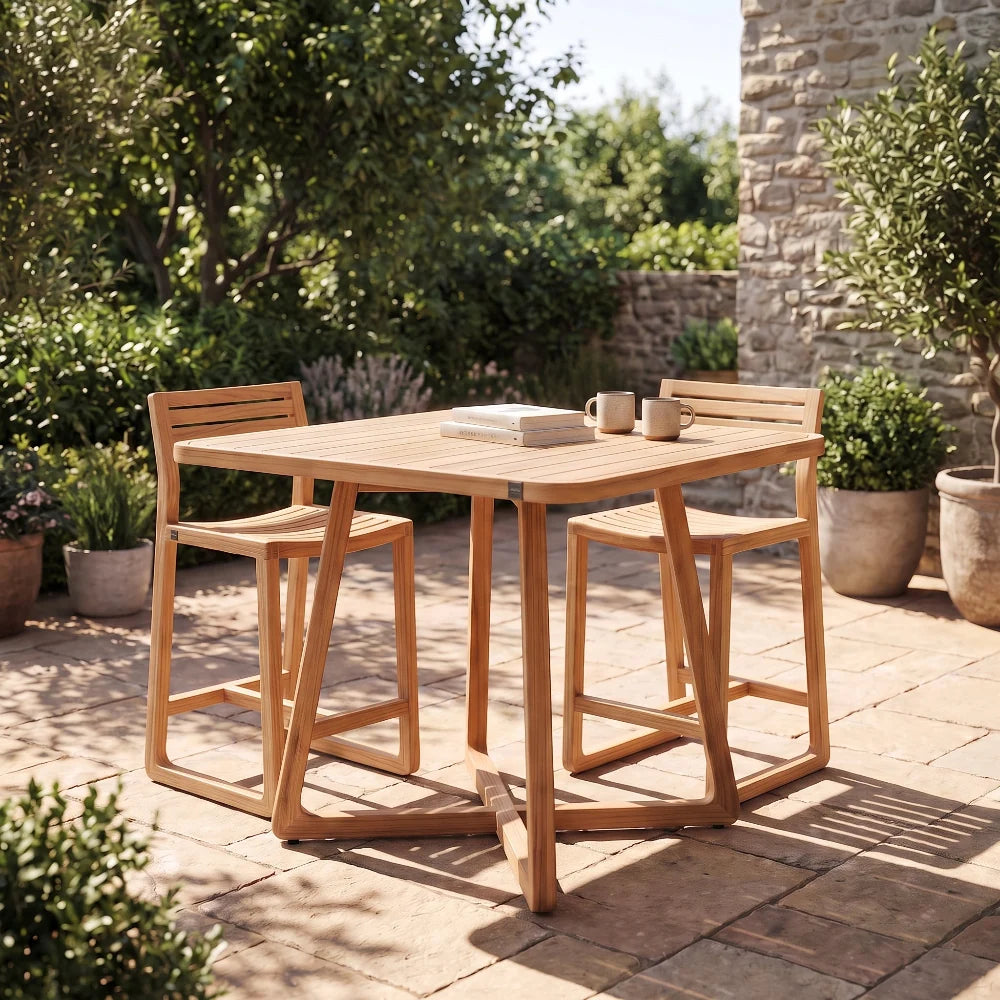
How Does Teak Age?
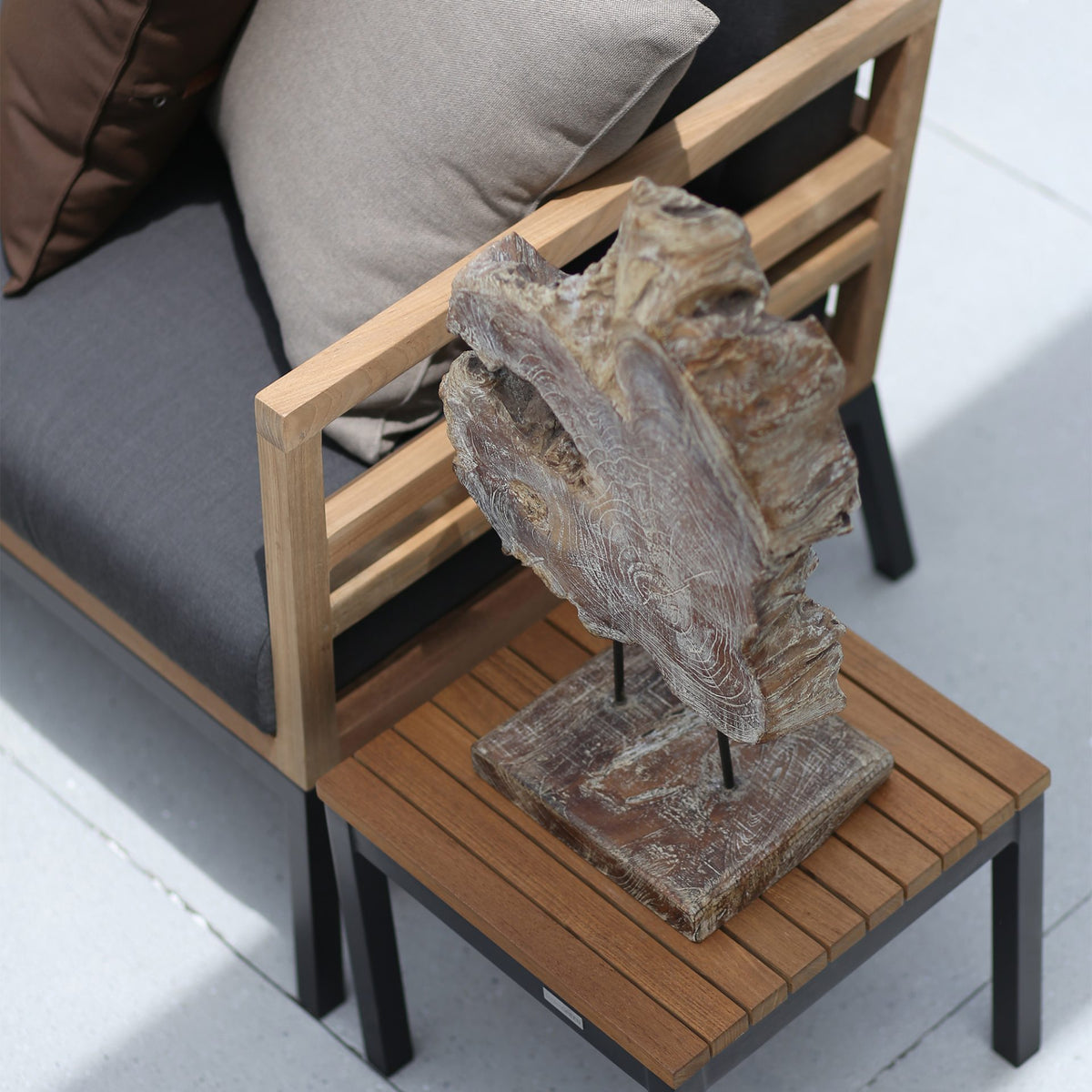
Before first use, rinse your teak, wipe it with a wet cloth or let it sit in the rain. This removes microscopic wood dust that can stain clothing. Left in the sun, teak develops a soft silver-grey patina and stays stable for many years. Because teak is a living material, this gradual change is natural. We deliver our furniture sanded, polished and sealed, and recommend letting it weather naturally. Teak needs no finishing to maintain its performance.
What Natural Changes Should I Expect?
Depending on environment and use, teak may show colour or texture differences, black spots, grey spots from acid rain, superficial mould or mildew, minor warping and hairline cracks. None of these affect its integrity. Recycled teak may also show black or red marks from small metal traces of old nails or bolts. To prevent marks and mould, allow air circulation when covering furniture, never cover it damp or dirty, clear leaves and bird droppings promptly, and avoid leaving moist items such as pot plants on the table.
How Do I Clean and Maintain Teak?
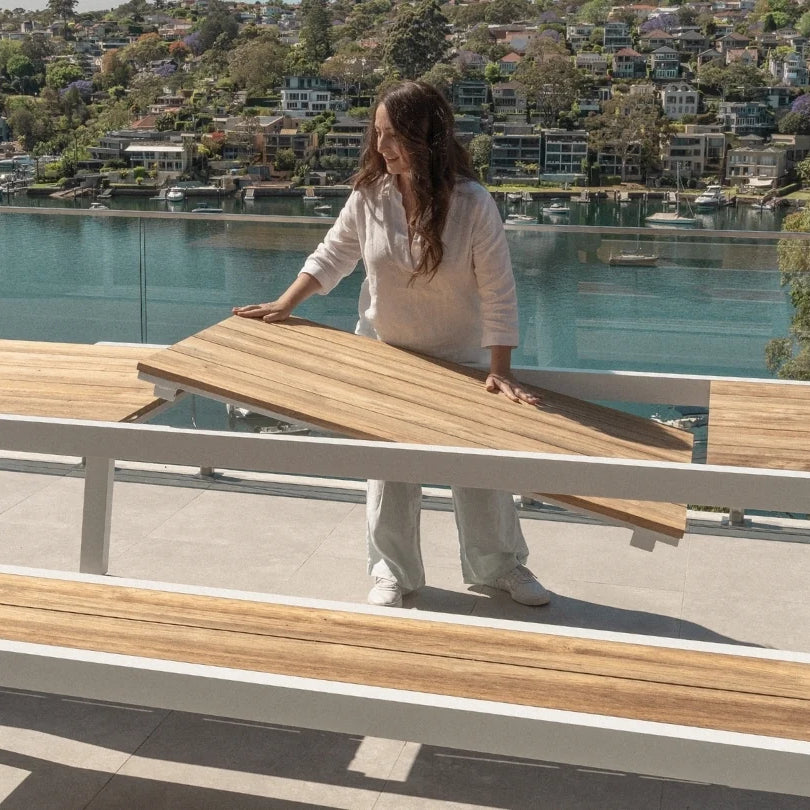
Clean regularly with a stiff brush, mild liquid soap and lukewarm water, then rinse thoroughly. Most stains lift with light sanding, and thorough sanding restores the original colour. Protective products can preserve the look or slow the greying process, so check with your dealer and follow instructions carefully. We do not recommend oiling teak, as oil can react with the wood and cause black mildew. If you apply any finish, sand first and re-apply it regularly.
What Are Aluminium Frames Made Of?
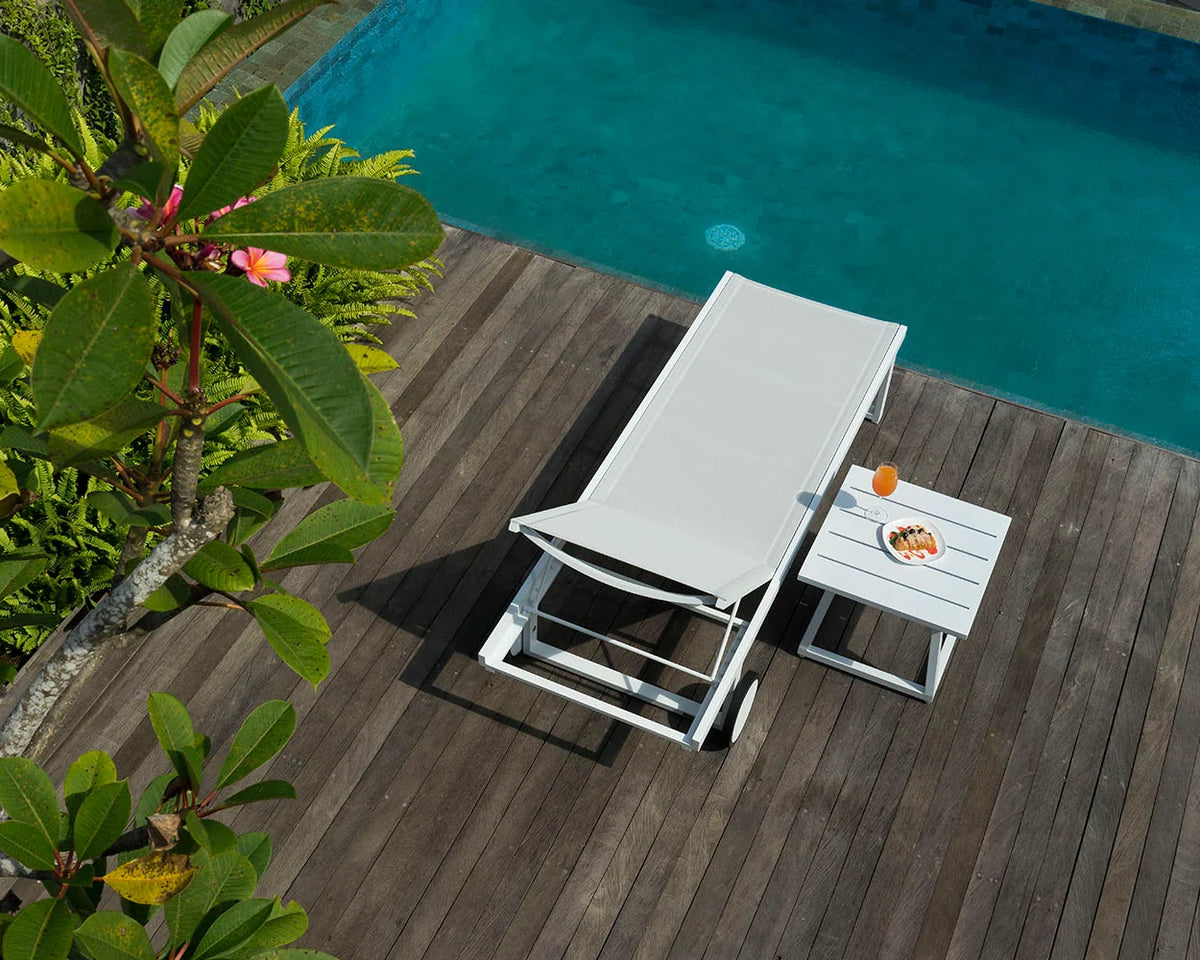
Made from 6063 aluminium alloy, these frames are electrostatically powder coated and oven-baked at high temperature, forming a solid, UV-resistant surface. Colours and textures vary slightly in specification, so check our colour charts for details. Ultra-Durable colours offer higher protection in chlorine and marine environments, with better UV and scratch resistance, making them the preferred choice for contract use. To prevent frost damage, keep the holes at the base of the legs and frame open so water can drain.
How Do I Clean and Protect Aluminium?
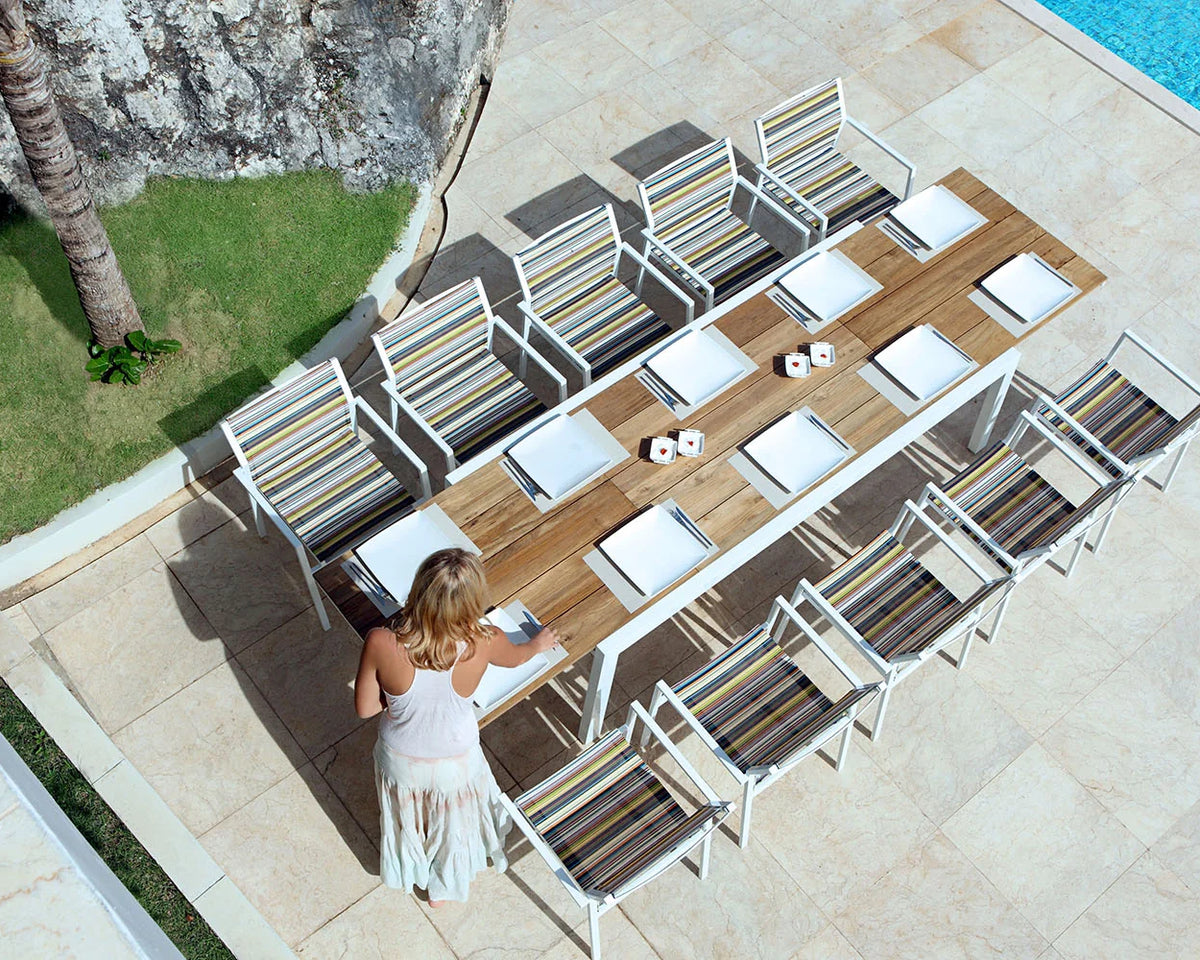
Wipe down with a soft brush and soapy cloth, then repeat without soap. Smooth surfaces clean more easily than textured ones, and stains lift with a Mr. Clean Magic Eraser. Avoid acidic, alcohol or solvent-based cleaners, and never use abrasive pads, sandpaper or metal brushes. Sandy or rocky areas, frequent moving and hard or sharp objects can wear the powder coating. Peeling or bubbling may appear in salty or chlorine environments, without affecting structural integrity. Touch-up paint is available to repair scratches or peeling.
Is 304 Stainless Steel Suitable for Outdoors?
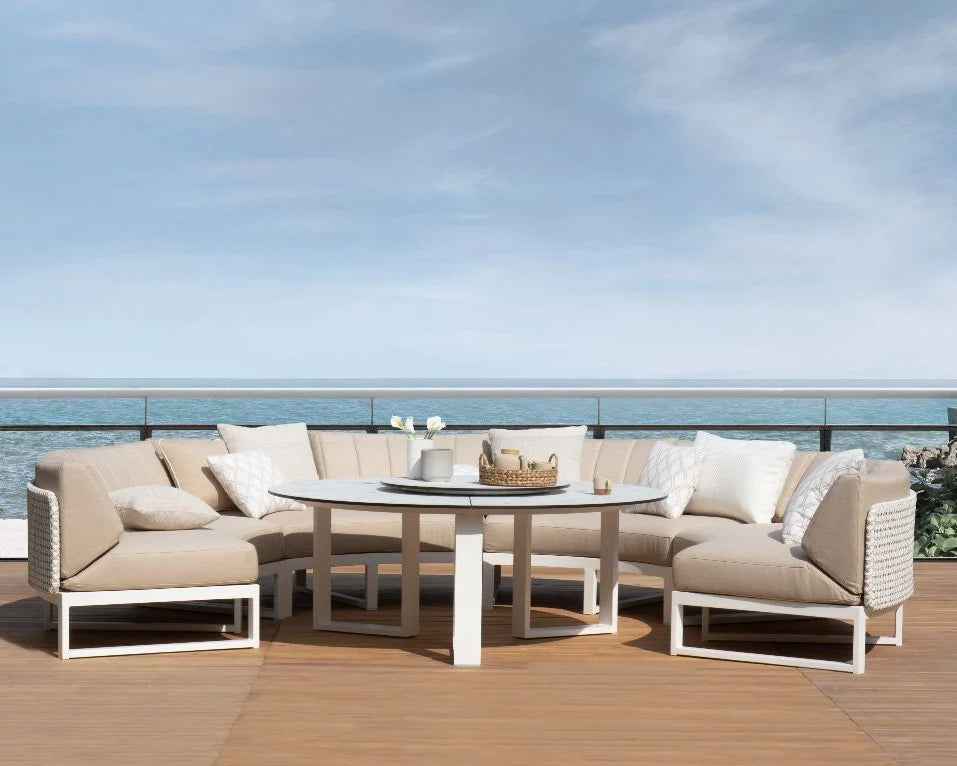
304 stainless steel frames are sturdy and suitable for most non-marine environments. They are not recommended near salt-water pools or close to the sea, where they can develop “tea staining”, a surface build-up of particles that oxidise or corrode. The hairline brushed satin finish helps hide stains and dirt, and regular cleaning extends the frame’s longevity and look. Tea staining does not harm the integrity of the metal, can be cleaned, and is considered normal wear.
How Do I Clean and Maintain Stainless Steel?
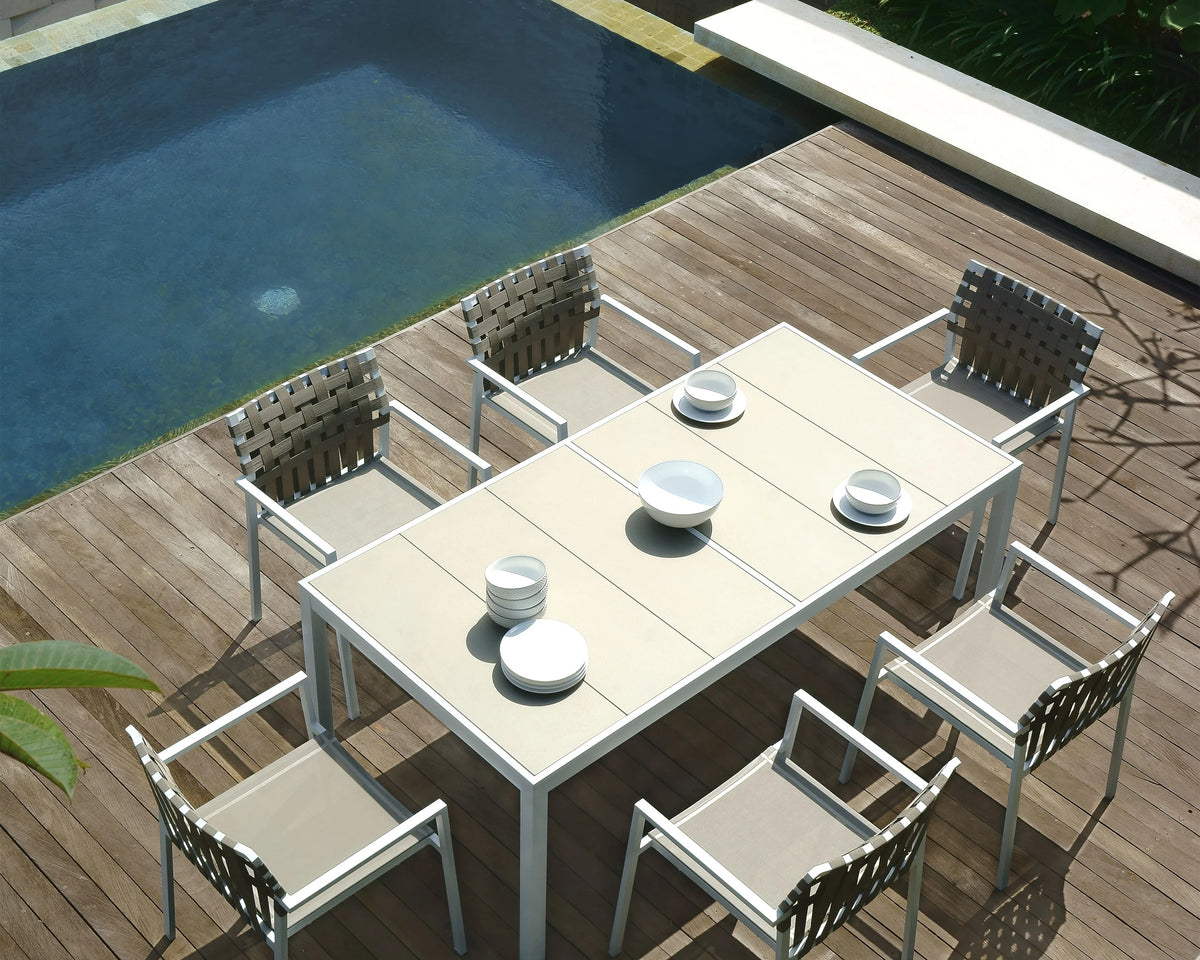
Clean with a soft brush and a cloth with 3M Stainless Cleaner & Polish or another household stainless steel cleaner. Avoid acidic, alcohol or solvent-based products, and abrasive pads or brushes. Wipe away all water, then leave the frame to dry in the shade to avoid watermarks. Polish every 6 months, or whenever discoloration occurs, to prevent and remove most tea staining. To avoid frost damage, keep the holes at the base of the legs and frame open so water can drain.
What Are Aluminium Frames Made Of?
Made from 6063 aluminium alloy, these frames are electrostatically powder coated and oven-baked at high temperature, forming a solid, UV-resistant surface. Colours and textures vary slightly in specification, so check our colour charts for details. Ultra-Durable colours offer higher protection in chlorine and marine environments, with better UV and scratch resistance, making them the preferred choice for contract use. To prevent frost damage, keep the holes at the base of the legs and frame open so water can drain.
How Do I Clean and Protect Aluminium?
Wipe down with a soft brush and soapy cloth, then repeat without soap. Smooth surfaces clean more easily than textured ones, and stains lift with a Mr. Clean Magic Eraser. Avoid acidic, alcohol or solvent-based cleaners, and never use abrasive pads, sandpaper or metal brushes. Sandy or rocky areas, frequent moving and hard or sharp objects can wear the powder coating. Peeling or bubbling may appear in salty or chlorine environments, without affecting structural integrity. Touch-up paint is available to repair scratches or peeling.
Is 304 Stainless Steel Suitable for Outdoors?
304 stainless steel frames are sturdy and suitable for most non-marine environments. They are not recommended near salt-water pools or close to the sea, where they can develop “tea staining”, a surface build-up of particles that oxidise or corrode. The hairline brushed satin finish helps hide stains and dirt, and regular cleaning extends the frame’s longevity and look. Tea staining does not harm the integrity of the metal, can be cleaned, and is considered normal wear.
How Do I Clean and Maintain Stainless Steel?
Clean with a soft brush and a cloth with 3M Stainless Cleaner & Polish or another household stainless steel cleaner. Avoid acidic, alcohol or solvent-based products, and abrasive pads or brushes. Wipe away all water, then leave the frame to dry in the shade to avoid watermarks. Polish every 6 months, or whenever discoloration occurs, to prevent and remove most tea staining. To avoid frost damage, keep the holes at the base of the legs and frame open so water can drain.
What Is HPL?
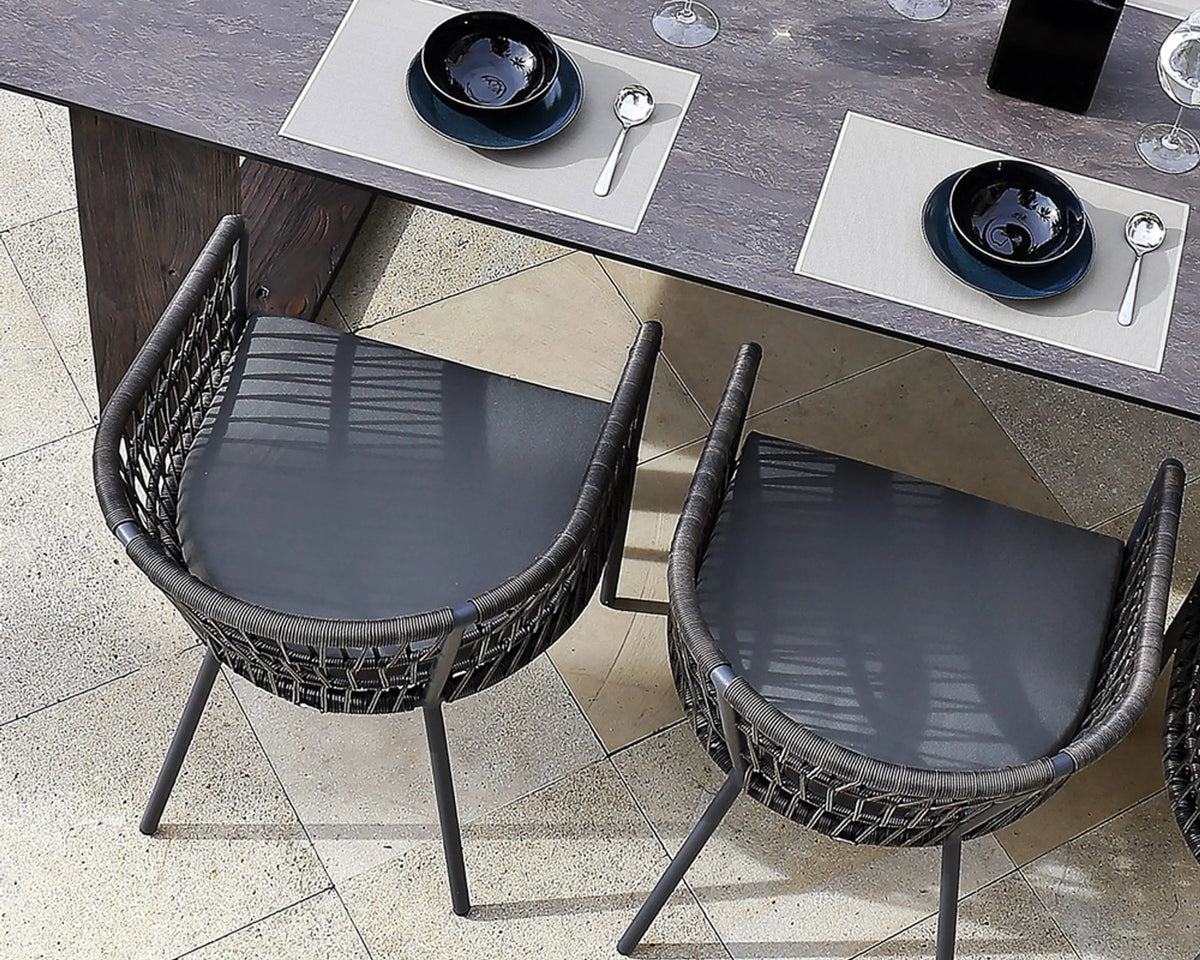
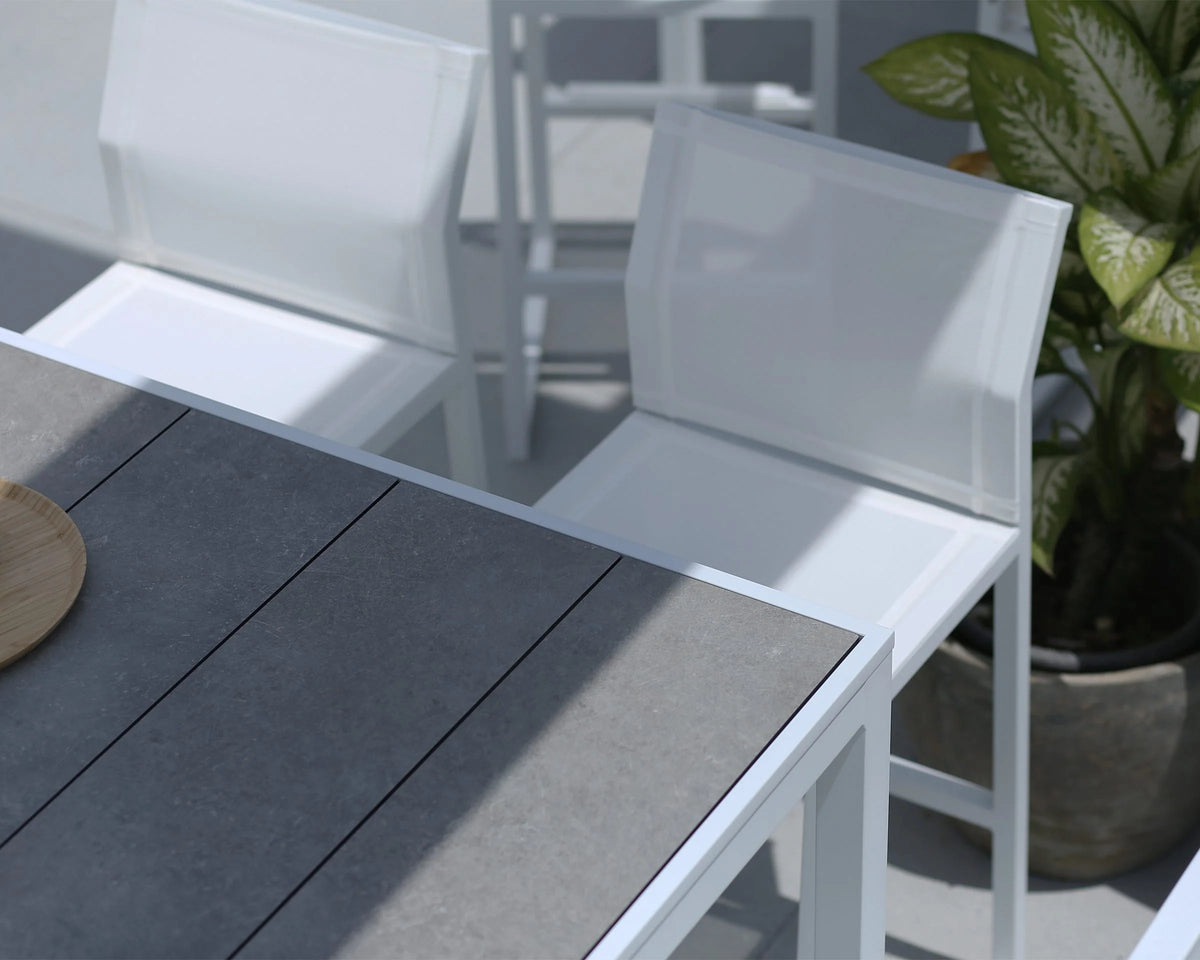
HPL table tops and panels are developed specifically for outdoor furniture and manufactured in Italy. Using advanced technology, thermosetting resins and kraft paper are pressed into solid, compact, self-supporting panels. HPL is known for its high impact, scratch and wear resistance, light fastness, hygienic qualities and low maintenance requirements.
How Does HPL Perform Outdoors?
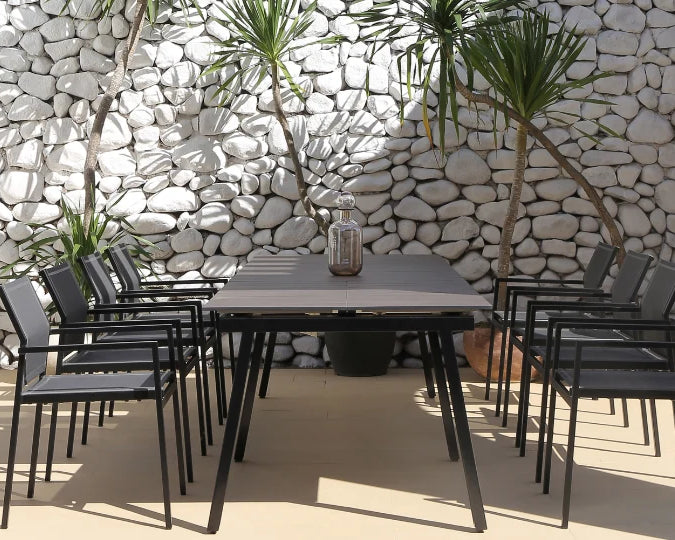
HPL responds to temperature changes, so minor expansion or bending may occur. Leaving an extension table open, with the extension leaf fitted and fixed in place, helps reduce this. Texture and colour also affect how much care is needed. Stains and scratches are far more visible on solid white surfaces than on stone-look motifs, which makes stone-look finishes the more forgiving choice.
How Do I Clean HPL?
- Spills: Wipe up immediately where possible.
- Food residue, stains and organic waste: Use domestic detergent and water.
- Candle wax: Soften with a clothes iron and a towel.
- Stubborn stains: Use a Mr. Clean Magic Eraser.
- Nail polish, linseed oil, markers: Remove with acetone and a cotton cloth.
- Synthetic oil paints, adhesive residues: Remove with 3M thinner.
What Is HPL?
HPL table tops and panels are developed specifically for outdoor furniture and manufactured in Italy. Using advanced technology, thermosetting resins and kraft paper are pressed into solid, compact, self-supporting panels. HPL is known for its high impact, scratch and wear resistance, light fastness, hygienic qualities and low maintenance requirements.
How Does HPL Perform Outdoors?
HPL responds to temperature changes, so minor expansion or bending may occur. Leaving an extension table open, with the extension leaf fitted and fixed in place, helps reduce this. Texture and colour also affect how much care is needed. Stains and scratches are far more visible on solid white surfaces than on stone-look motifs, which makes stone-look finishes the more forgiving choice.
How Do I Clean HPL?
- Spills: Wipe up immediately where possible.
- Food residue, stains and organic waste: Use domestic detergent and water.
- Candle wax: Soften with a clothes iron and a towel.
- Stubborn stains: Use a Mr. Clean Magic Eraser.
- Nail polish, linseed oil, markers: Remove with acetone and a cotton cloth.
- Synthetic oil paints, adhesive residues: Remove with 3M thinner.
EXPLORE SLH FURNITURE
OUR PROJECTS
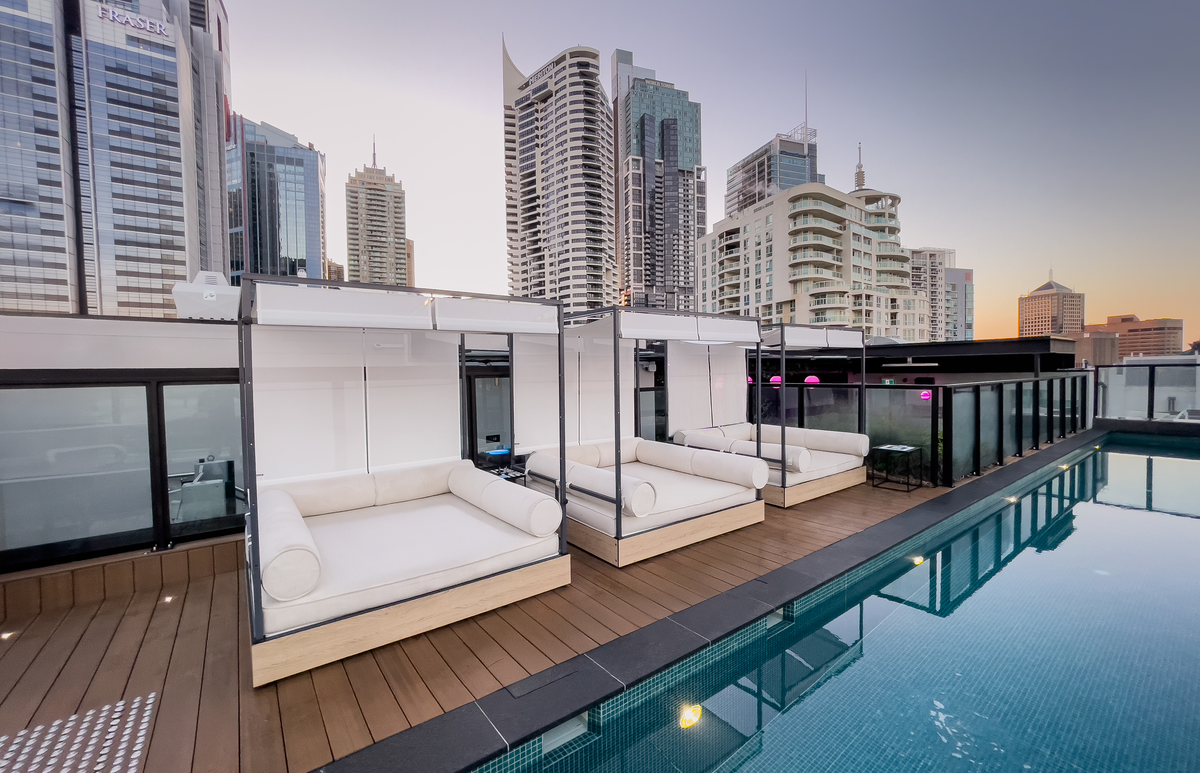
At SLH, we absolutely love helping professionals who share our passion for interior design. With our range of unique designs and exclusive brands, we've always got something just right for your vision. We have a vast range of high-quality furniture, including collections capable of withstanding both residential and commercial daily use.
OUR SHOWROOM
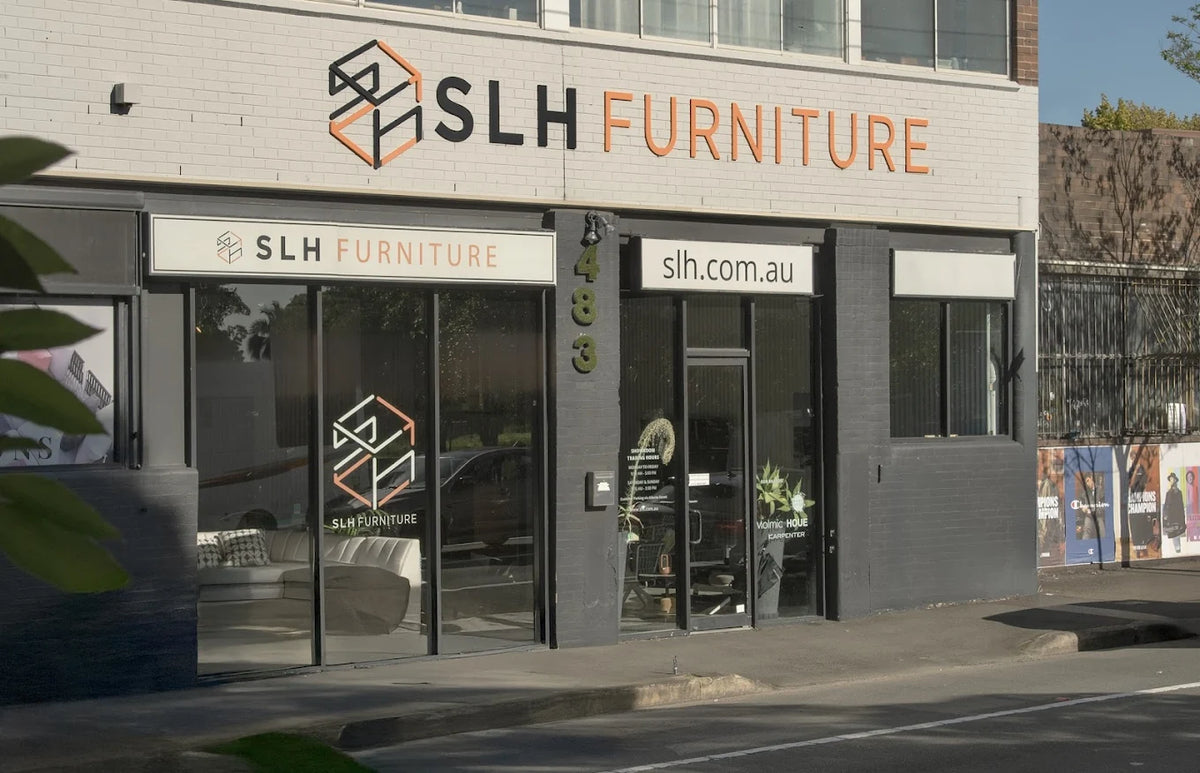
We want you to be able to experience and get to know your new furniture before you take it home. And this space has been designed so that you can not only see the furniture in person but feel the quality and understand how it will work in your home. Our highly experienced team members are here 7 days a week to help.
We are proud to partner with i=Change.
We give back $1 from every purchase, you choose where it goes!
Blog posts

Why we do giveaways?

Inside The Design Tribe 2026: Sydney’s Design Community Comes Together in Alexandria