


As spring turns to summer, the backyard, deck and balcony start doing a lot more work. Longer evenings, hotter days and the lead-up to Christmas mean more time outside and more people to seat. Whether you’re furnishing a city courtyard, a pool area or a house by the beach, a little planning now makes the whole season easier. If you’re planning ahead, our Black Friday sale is also on, with 30% to 70% off across the site until 27 November.
This guide covers the main zones of an outdoor space and what to think about in each.

Start with sun and shade
Summer changes how an outdoor area feels. A spot that’s pleasant in October can be too hot by January. Spend a day watching where the sun falls and where the shade sits, then place furniture to match. Dining usually works best in shade, while sunloungers suit the sun. An umbrella, shade sail or pergola helps, but even moving a table a few metres can make a difference.
Choosing an outdoor dining table
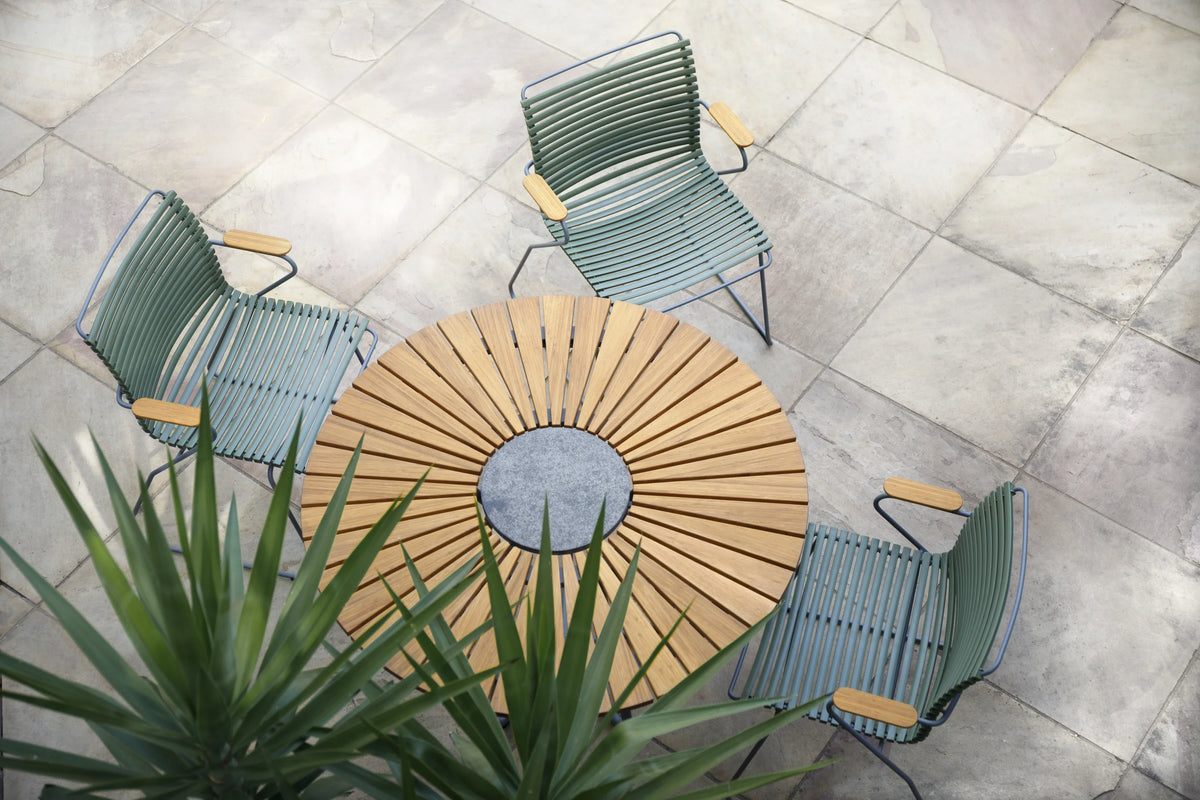
For many households, the outdoor dining table is the centre of summer. Allow about 60 to 70 cm per person, and leave at least a metre around the table so chairs can move freely.
Round tables suit smaller or square spaces and make conversation easier. Rectangular tables work well in long, narrow courtyards. If you host more over the holidays, an extendable outdoor table gives you extra seating without leaving a large table out all year.

Outdoor dining chairs for long summer dinners
Summer meals tend to run long, so comfort matters. Look for a supportive seat and back, and decide whether you want arms. Armless chairs tuck in neatly, while chairs with arms suit lingering. Check the finish too, since outdoor dining chairs take a lot of sun and daily use through the warmer months.
Outdoor bar tables and stools
If your outdoor area sits next to the kitchen or barbecue, an outdoor bar table with bar stools suits summer drinks and casual meals. It’s also a good fit for tighter spaces where a full dining table won’t work.

Outdoor lounge chairs and sofas
Lounge seating is for the part of summer that isn’t about eating. A pair of outdoor lounge chairs and a small side table is often enough for a balcony or garden corner. Larger spaces can take an outdoor sofa, which gives you a proper place to sit with a book or a drink after the heat of the day. Check how cushions and fabric handle sun and humidity.
Poolside furniture: what to look for
Pool areas are some of the hardest-working outdoor spaces. Furniture gets wet, sits in full sun and often meets chlorine splashes and sunscreen.
- Sunloungers are the centrepiece. Think about whether you want a fixed or adjustable back, and how easy the piece is to move, because you’ll want to follow the sun through the day.
- Drainage and quick drying. Slatted or open designs let water run off, and fabrics made for outdoor use dry faster.
- Heat. Some dark surfaces get very hot in direct sun, which matters on bare skin. Lighter colours and timber are often more comfortable to touch.
- Weight. Pieces you can move easily are handy for chasing the shade, but check that they’re stable enough for windy days.
- A small side table between loungers is useful for drinks, sunscreen and a book.

Furnishing a beach house or coastal home
A house by the beach asks more of its furniture. Salt air, strong sun, wind and sand all take a toll, so material and finish matter more here than anywhere else.
- Choose materials for salt air. Powder-coated aluminium frames are made to resist rust, and ceramic tabletops stand up well to weather. Natural materials like teak and bamboo can also work, with a little care.
- Rinse regularly. A fresh-water rinse every so often removes salt build-up and helps furniture last longer.
- Plan for wind. Heavier pieces stay put better, and cushions with ties or secure fits are less likely to blow away.
- Keep it relaxed. Coastal homes suit natural tones and easy, comfortable seating, which also tends to hide sand and everyday wear well.
- Think about holiday use. If the house sits empty for part of the year, durable, low-maintenance pieces are easier to live with.
Browse the full outdoor furniture collection to see everything in one place.

Choosing outdoor furniture materials for Australian conditions
Summer brings strong UV, heat and the odd storm, and pools and beaches add chlorine and salt. Each material handles this a little differently:
- Powder-coated aluminium is durable and helps prevent rust, and usually just needs a wipe with soapy water.
- Teak handles sun and rain well. Left untreated, it weathers to a soft silver-grey, and a little teak oil each year keeps the golden tone.
- Ceramic tabletops resist scratches, stains, heat and UV, and don’t need sealing.
- Bamboo is strong and stable, and benefits from an occasional oiling.
Ask how a piece should be looked after before you decide, because that shapes how it looks after a few summers.

See outdoor furniture in person in Sydney
Furniture can look very different outdoors than on a screen. If you’re in Sydney, our Lilyfield showroom is a good place to check scale, finish and comfort first-hand. If you’re further away, our outdoor range is organised by category, so you can go straight to the zone you’re planning.
Outdoor furniture FAQs
How much space do I need for an outdoor dining table?
Allow about 60 to 70 cm per person at the table, plus at least a metre of clearance around it so chairs can move freely.
What’s the best outdoor furniture for Australian summers?
Look for materials made for outdoor use, such as powder-coated aluminium, teak and ceramic tops. The best choice also depends on how much sun and shelter your space gets.
What furniture works best around a pool?
Pieces that drain and dry quickly, handle chlorine and sun, and stay comfortable to touch in the heat. Sunloungers with a side table are the usual starting point.
What outdoor furniture is best for a beach house?
Look for materials and finishes suited to salt air and strong sun, and pieces that are easy to rinse and maintain.
Should I choose round or rectangular outdoor dining tables?
Round tables suit smaller or square spaces and are good for conversation. Rectangular tables suit longer spaces, and extendable ones are useful if you host often.
Want to know more about what our outdoor furniture is made of and how to look after it? Read our outdoor furniture materials and care guide.
